
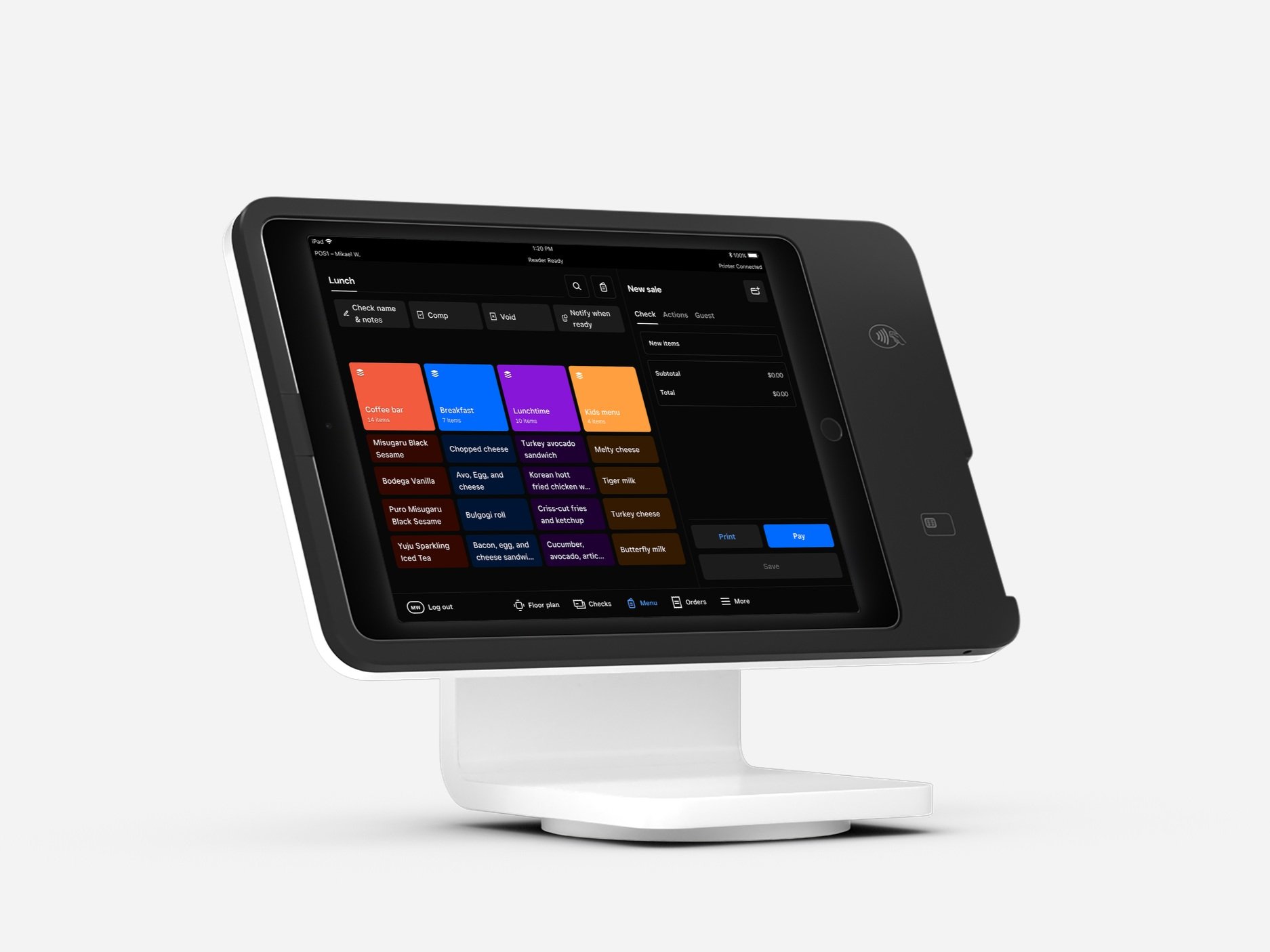
Next generation restaurant point of sale
Square's early strategy let each vertical build independently, fast at first, but it created silos that slowed growth over time. Leads across teams came together to build a unified orders backend that shared features, improved seller experiences, and enabled more complex partnerships. I represented Square for Restaurants.
Design lead for : 4 restaurant designers, 4 cross functional designers
Teams : 5 restaurant teams, 8 vertical teams
Number of features : 15
Timeline : ~1.5 years to complete
Contributed : Strategy, research, designs, marketing, success metrics, beta planning, management
The problem
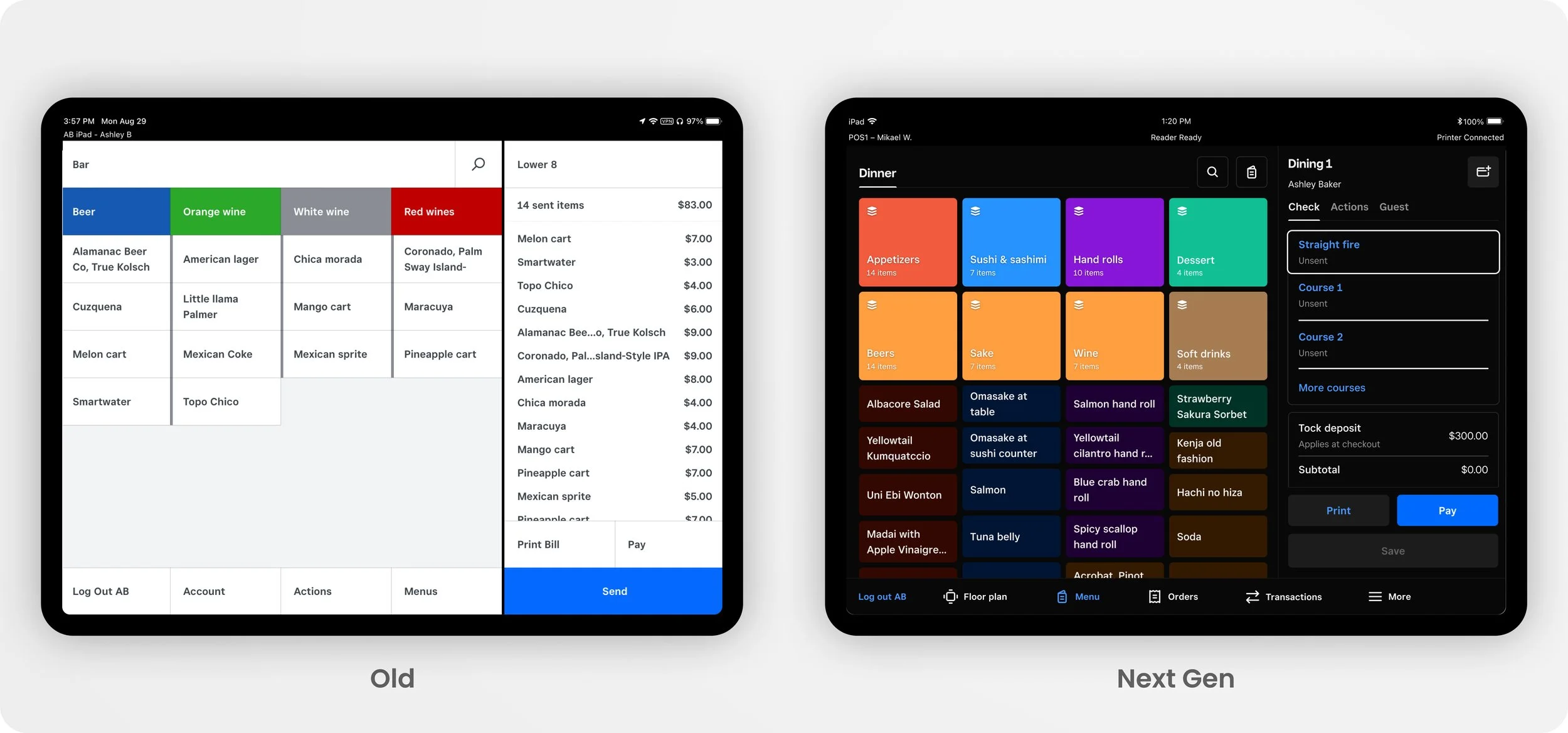
Users were confused by inconsistent functionality across business types. For example, Square offered reservations and scheduling features for appointment-based businesses but not for restaurants. This led to frustration among Square business owners.
The solution
Build a unified point of sale with a shared foundation across verticals.
Why it matters
Inconsistent features eroded trust in Square. Sellers shouldn't be exposed to our internal structure. A shared core means teams scale faster and sellers get a reliable, consistent experience regardless of their business type.
My role in the beginning
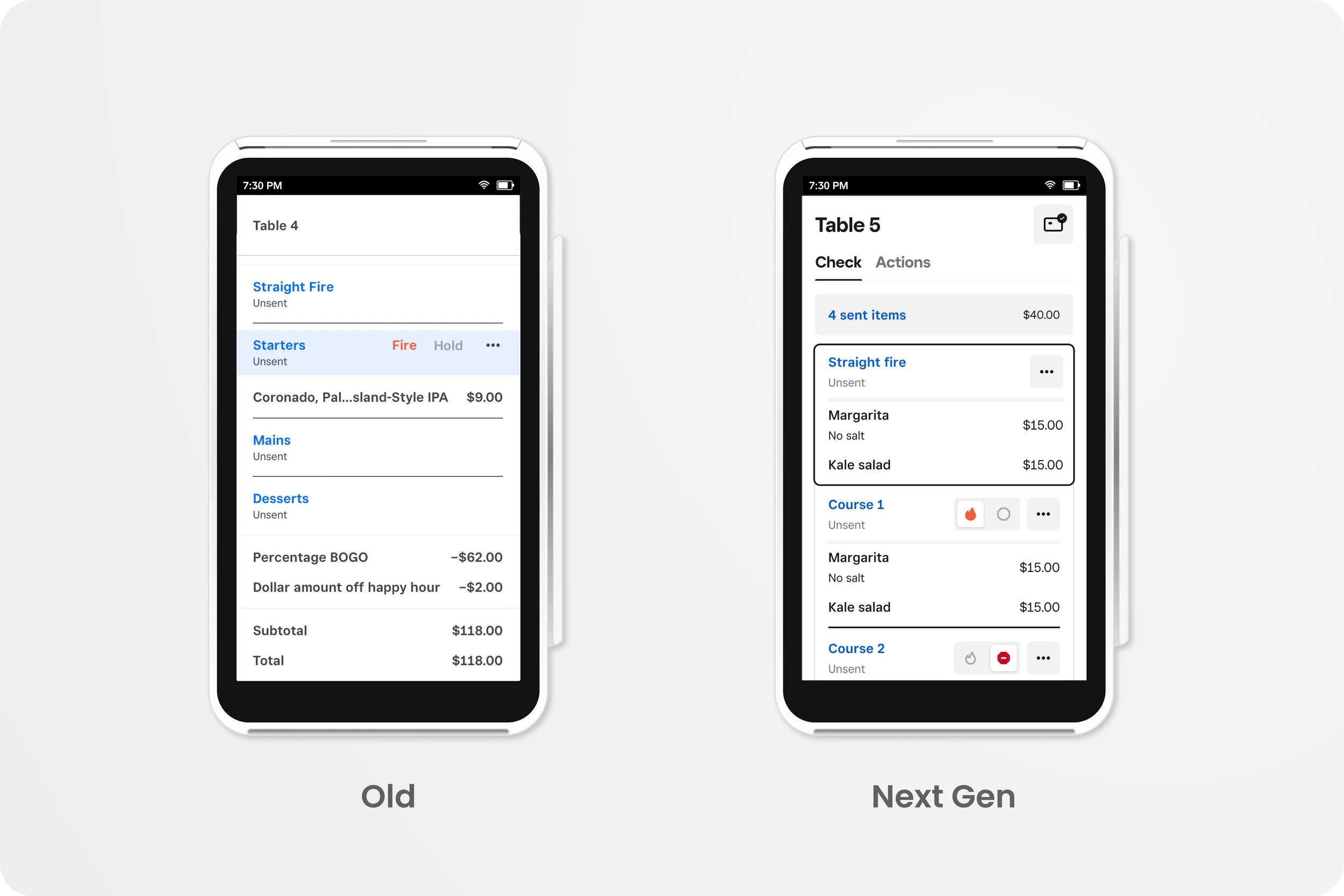
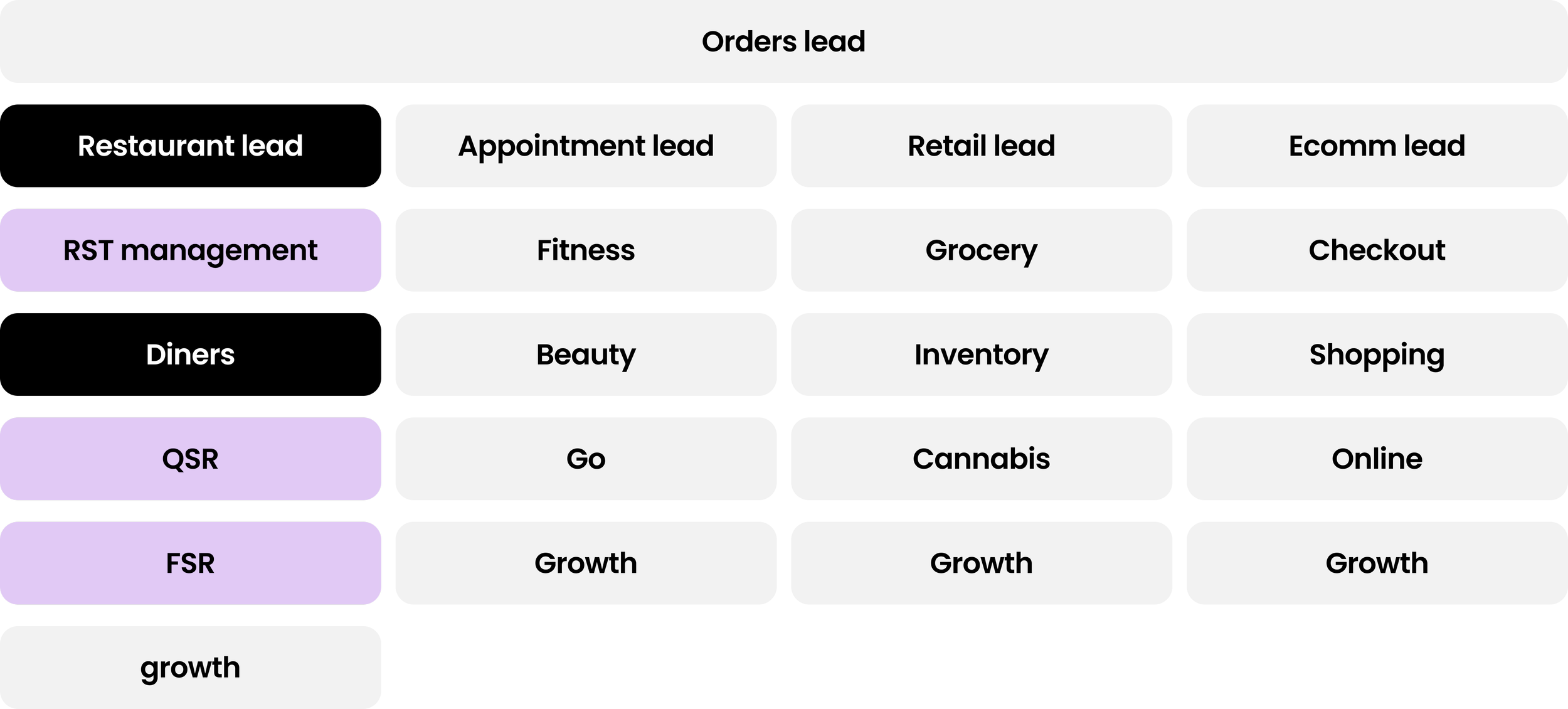
My end-to-end projects are highlighted in black. As the sole designer, I partnered with design leads and cross-functional teams to define the platform vision, own restaurant-specific features, set strategy, define milestones, and keep teams aligned.

How my role evolved
Teams highlighted in purple represent the designers I helped lead. As the team grew, I took on a broader leadership role across Square for Restaurants and Next Gen vertical leads, prioritizing and sequencing projects, onboarding designers, and connecting them to the right teams and resources. I set standards, guided strategy, and kept work cohesive, while continuing to own select features end to end.
Target audience
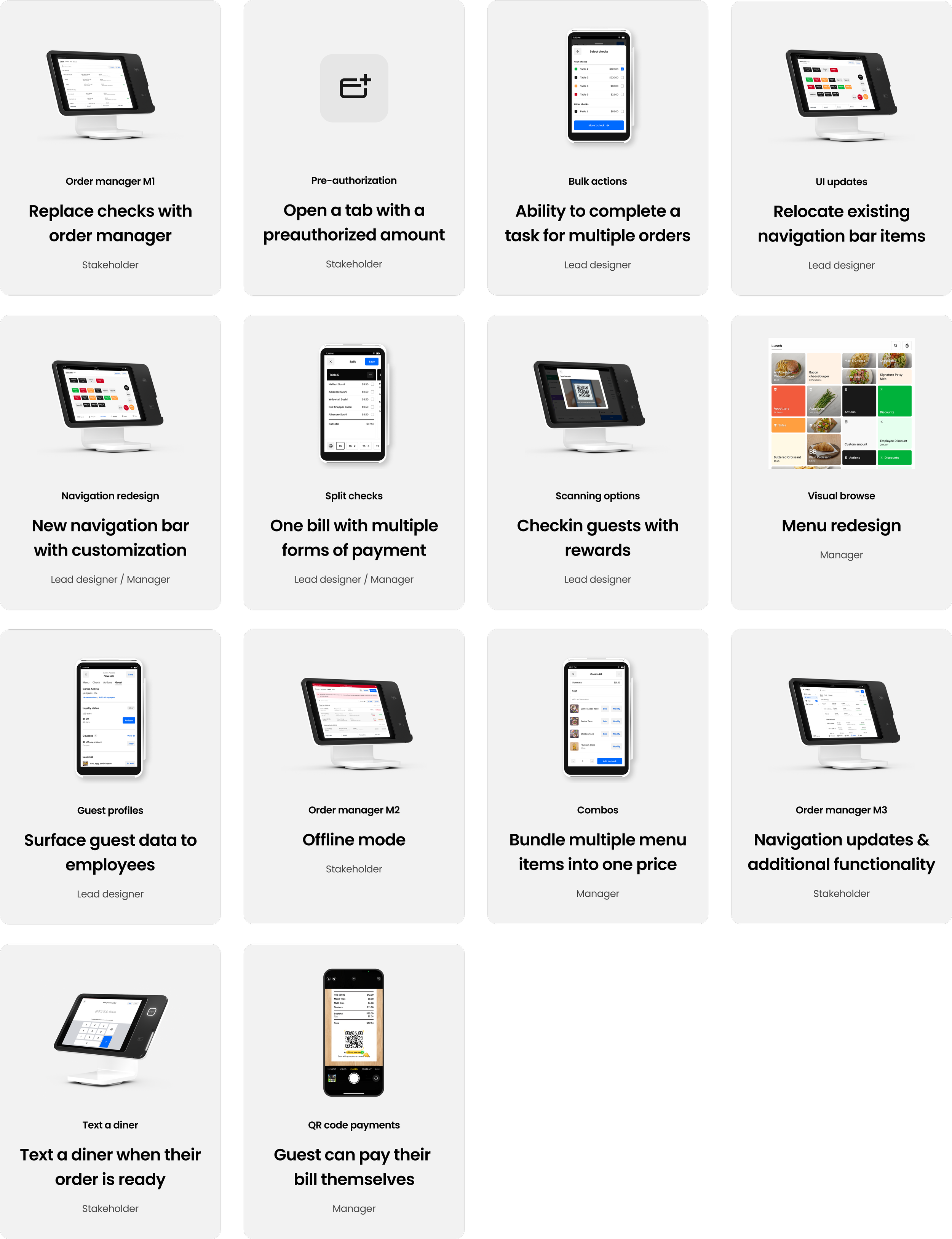
Projects
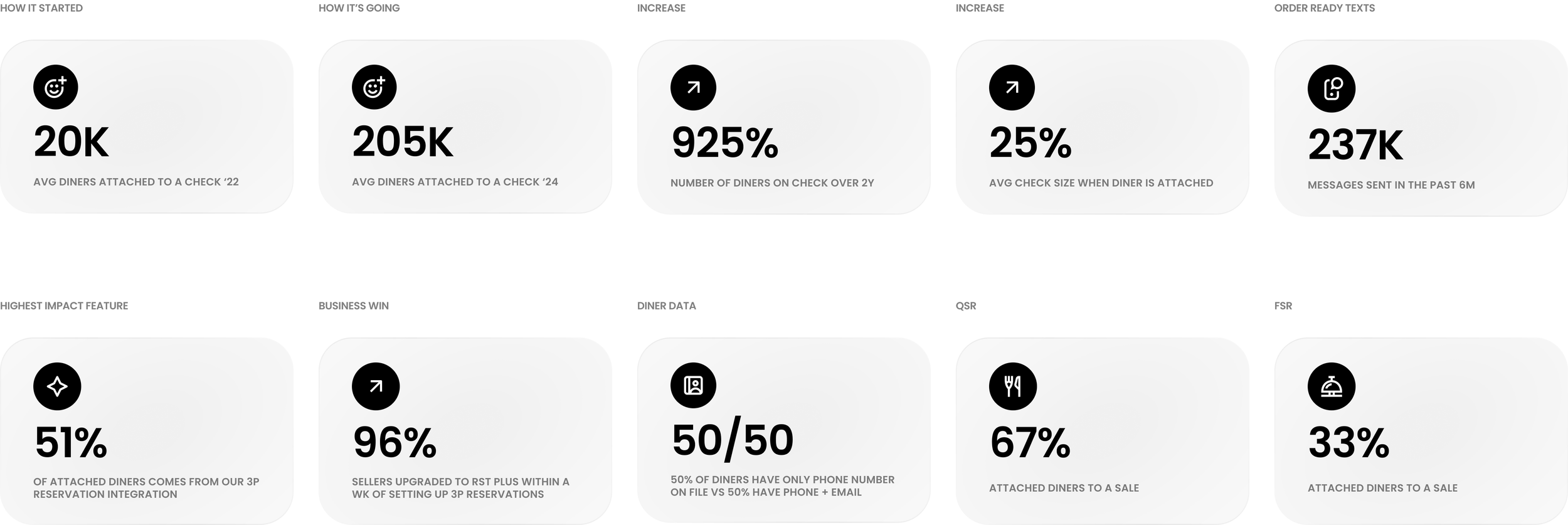
How’d it go?